
The Walking Dead No Man's Land
Deca GamesStrategy
4.572.45K Reviews
- Version
- 7.22.0.247
- Installs
- 10.00M
- Age Rating
- Mature 17+
Screenshots
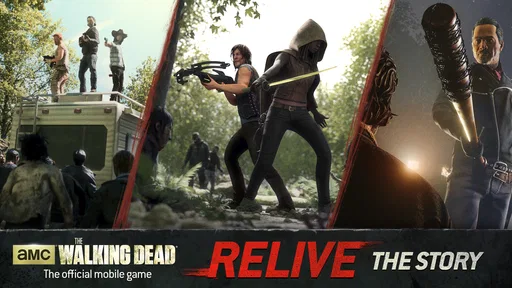

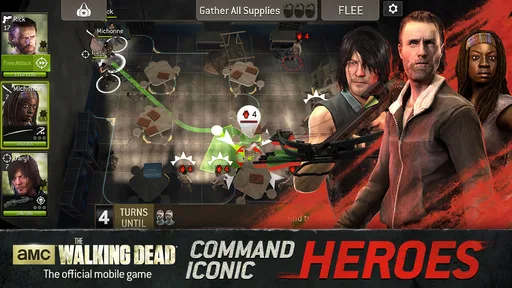
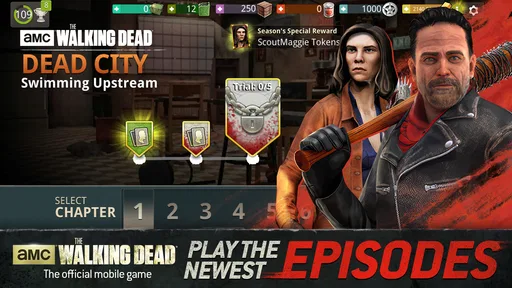

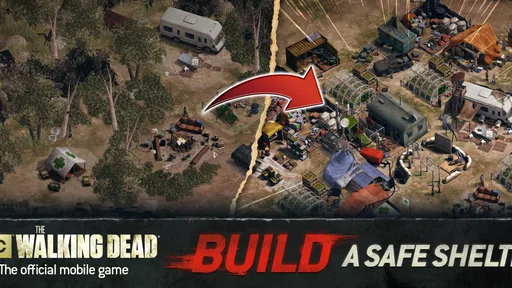
Our Review of The Walking Dead No Man's Land
 Analysis by Appyee
The first thing I noticed about The Walking Dead No Man's Land is that it asks me to think before I move. This is not a fast zombie shooter where I can simply point at a crowd and keep firing. It is a turn-based strategy game built around survivors, limited actions, dangerous positioning, and the constant feeling that one careless choice can ruin an otherwise good run. That makes it a strong fit for players who enjoy planning under pressure, especially if the world of The Walking Dead already appeals to them.
It is a free game from Deca Games, available for Android devices running at least Android 7.0, with optional in-app purchases ranging from $0.99 to $99.99 per item. The game is rated Mature 17+, so I would not treat it as a casual family strategy title. Its presentation leans into violence, bleak survival situations, and the harsher side of the franchise. I found that tone useful because the game’s systems make more sense when every mission feels like a risky scavenging trip rather than a harmless puzzle.
What the first hours really feel like
The opening experience is more approachable than the mature rating might suggest from a controls perspective. I move survivors across a grid, choose attacks or other actions, and end turns while watching the enemy response. The basic controls are easy to understand, but the important decisions appear almost immediately: whether to spend an action attacking, whether to move closer to an objective, and whether to leave enough distance to avoid being surrounded.
That distinction between easy controls and difficult decisions is the heart of the game. A new player can understand what each button does within minutes, yet still lose a mission by treating every turn as an opportunity to attack. I had better results when I viewed movement as a resource. A survivor who reaches a useful position safely may contribute more than one who lands a flashy hit and then gets trapped.
The game uses the familiar Walking Dead setting as more than decoration. Survivors, walkers, and human threats create different kinds of pressure, so I cannot rely on one repeated tactic for every encounter. Walkers encourage me to manage noise, distance, and crowd control, while human opponents make cover, targeting, and turn order feel more important. The most valuable early habit is planning the next enemy response before committing the current move.
For a first-time player, I recommend resisting the temptation to rush through the introductory objectives. They teach the rhythm of the game: take an action, observe the result, and prepare for what follows. I also pay attention to which survivor is best suited to a task rather than sending the same character forward every time. That small change makes missions feel less random and helps me understand why a team succeeds or fails.
The game has a substantial audience, reflected in an average rating of 4.5 from around 856 thousand ratings and more than 10 million installs. Those figures do not make every design choice perfect, but they do match my impression that this is a well-established mobile strategy game rather than a short promotional tie-in. Its current version is 7.22.0.247, so the experience has clearly developed beyond its original release in October 2015.
Starting without wasting early resources
My advice during setup is simple: do not spend valuable resources just because the game presents an immediate upgrade. Early rewards can make progress feel generous, but strategy games often become more demanding after the tutorial pace ends. I prefer to learn which survivors I actually use before investing heavily in every available improvement.
When a mission offers more than one possible objective, I first identify the condition that can endanger the whole team. If the goal is to reach a location, I avoid unnecessary fights. If the goal depends on defeating enemies, I look for a safe position before starting the battle. This approach is especially helpful on a phone, where interruptions are common and it is easy to reopen the game without remembering exactly what I planned.
I also suggest playing the first few missions with sound and visual effects enabled if your surroundings allow it. Audio and animation can make enemy turns easier to follow, particularly when several threats activate in sequence. Later, I may reduce the volume, but during the learning stage those cues help me understand what happened after a risky move.
Another useful setup decision is choosing a comfortable session length. Although individual turns are compact, the broader progression encourages repeated missions, upgrades, and management between battles. I would not begin with the assumption that every session will be a five-minute distraction. It works better when I have enough attention to review the battlefield rather than tapping quickly while doing something else.
The first meaningful success
The first satisfying victory is not simply clearing a mission. For me, it came when I finished an encounter without taking avoidable damage because I had deliberately controlled the order of events. I moved one survivor into a safe position, used another to handle the nearest threat, and kept a third ready to respond instead of exposing everyone at once. That felt like a genuine strategic success, not just a result of stronger numbers.
New players can reproduce that experience by following a cautious sequence. Start by checking the full reachable area, not only the nearest enemy. Identify which opponents can attack immediately and which are likely to require another turn. Then move the survivor with the safest job first. If an attack is available but leaves the character isolated, I usually prefer a defensive position or a coordinated move.
One non-obvious lesson is that a survivor’s role matters even when that survivor is not dealing damage. A character can block a route, draw attention, protect a weaker teammate, or preserve a better attack angle for the following turn. I used to judge every action by the number of enemies it removed. The game became more manageable when I started judging actions by how many safe choices they created for the next turn.
After a successful mission, I do not immediately assume that the same team and approach will work again. I check who performed well, who was exposed, and whether the victory depended on luck. If one survivor repeatedly ends missions injured or surrounded, that is a warning about my positioning rather than proof that the character is useless. Reviewing that pattern is more valuable than blindly repeating the same formation.
Where new players commonly get confused
The biggest source of confusion is the difference between a legal move and a good move. The game may allow a survivor to reach a tile or attack an enemy, but that does not mean the action is safe. I have lost momentum by focusing on what I could do immediately instead of asking what the enemy would do afterward.
Another common mistake is treating every walker as an isolated target. Groups change the shape of the battlefield. Removing one threat can open a path, but it can also leave a survivor standing where several others can reach them. I now look at the surrounding tiles before attacking and consider whether the defeated enemy was actually the most urgent problem.
Noise and attention can also be easy to underestimate. In a zombie survival game, a loud or careless action can turn a controlled encounter into a crowd-management problem. I do not assume that clearing the visible enemies means the area is safe. I leave room to retreat and avoid ending a turn in a position that depends on no additional threat appearing.
Human enemies create a different kind of confusion because the safest response is not always the most aggressive one. They can make open movement feel dangerous, and I have found that exposing a survivor merely to gain a small attack advantage is often a poor trade. When the battlefield contains both walkers and human opponents, I decide which threat controls my movement first, then build the turn around that answer.
Progression can be confusing for another reason: a failed mission does not always mean the team needs an immediate upgrade. Sometimes the real problem is that I used actions inefficiently or entered a fight from the wrong side. Before spending resources, I replay the situation mentally. If the same survivor was repeatedly caught in danger, I change the plan first. Upgrading is useful, but it should solve a problem I understand.
How the free model affects the experience
The game is free to download and play, but it includes optional purchases. In my experience, that means I need to be deliberate about the difference between progress and convenience. A purchase can feel tempting after a difficult mission or when a reward is presented as a shortcut. I prefer to continue normally until I know whether the obstacle is truly a progression wall or simply a tactical mistake.
This is also why I would not recommend the game to someone who dislikes any form of mobile monetization. Even when I am enjoying the strategy, the surrounding progression can remind me that the game is designed for long-term engagement. Players who want a single fixed-price campaign with no recurring decisions may be happier with a premium strategy title.
For everyone else, the sensible approach is to set a personal limit before playing. I treat purchases as optional convenience rather than part of the basic strategy. That keeps the tactical layer meaningful and prevents a difficult encounter from turning into an impulse decision. The game is most rewarding when I understand why I won, not when I simply bypass the reason I lost.
Small tactics that make a big difference
My first practical tip is to preserve an escape route. I avoid placing the whole team against a wall or deep inside a narrow area unless the mission clearly requires it. A retreating survivor needs somewhere to go, and a route that looks safe at the start can become blocked after enemy movement. Keeping one open lane often matters more than squeezing out an extra attack.
Second, I separate scouting from commitment. I move the survivor who can safely reveal the next part of the area before sending the most vulnerable character forward. This reduces the chance that my strongest attacker becomes the first target. It also gives me a better view of whether the next turn should focus on combat, repositioning, or reaching the objective.
Third, I avoid spending every action on the same character simply because that character has the best immediate option. Coordinating the team can produce a safer result. One survivor may weaken a threat, another may finish it, and a third may secure the position needed to prevent a counterattack. This is slower than tapping the first available attack, but it creates fewer emergencies.
A fourth insight is to judge mission success by the condition you must protect, not only by the enemies you can defeat. If a survivor must remain safe, I make that character’s escape route the center of the plan. If the objective is movement, I stop fighting once the path is secure. This sounds obvious, but the game’s combat feedback can make defeating enemies feel more urgent than completing the actual task.
Finally, I use short sessions for experimentation rather than always chasing progress. A mission can teach me whether a different survivor order, route, or timing works better. That mindset reduces frustration because a failed attempt still produces useful information. The game rewards patience more than frantic repetition.
Who will enjoy it, and who should skip it
I think this is a good choice for fans of turn-based tactics who want a recognizable survival setting and a steady stream of decisions. It suits players who enjoy building a group, learning enemy patterns, and making careful choices with limited actions. The Walking Dead theme adds emotional context, but the game remains enjoyable even when I focus mainly on its battlefield systems.
It is also a good fit for someone who wants strategy that works in short bursts but still has enough progression to support longer sessions. I can complete a focused mission, put the phone down, and return later to reconsider my team or approach. The experience is less demanding than a complex desktop strategy game, yet it has more depth than a simple match-and-clear mobile title.
I would skip it if I want real-time action, uninterrupted story scenes, or a completely offline-feeling premium experience. Players who dislike repeated missions, resource management, or the pressure of optional purchases may find the long-term structure tiring. It is also not ideal for younger players because of the Mature 17+ rating and the violent survival tone.
Compared with other mobile strategy games, its strongest difference is the combination of recognizable characters and compact turn-based encounters. A pure tactics game may offer more elaborate maps or deeper customization, while a casual zombie game may be faster to understand but less demanding. This title sits between those approaches: accessible enough to start quickly, but punishing enough that careless play remains costly.
What to do after the tutorial rhythm settles
Once I understand the basic turn structure, I stop measuring progress only by the next unlock. I begin tracking which situations cause trouble: crowded spaces, mixed enemy groups, exposed objectives, or missions where I split the team too early. That personal list becomes more useful than a general upgrade plan because it tells me what to improve in my own play.
I also recommend choosing one reliable team pattern before experimenting with unusual combinations. A stable group gives me a reference point. When I change several survivors or tactics at once, I cannot tell whether the result came from the lineup, the route, or the timing. Changing one element at a time makes the game’s strategy easier to read.
For everyday play, I would use it during a commute, a break, or a quiet evening when I can give each turn some attention. A realistic session might begin with one mission, continue with reviewing survivor performance, and end after a small upgrade or planning decision. That rhythm works well for me because it avoids both extremes: rushing through battles and becoming trapped in an endless session.
If a mission suddenly feels much harder, I first ask three questions: did I enter from the safest side, did I spend actions in the right order, and did I protect the actual objective? Only after answering those questions do I consider spending resources. This habit saves frustration and helps keep the game’s tactical identity intact.
The Walking Dead No Man's Land is at its best when I treat every turn as a small survival puzzle rather than a race to eliminate everything on screen. Its free entry point makes it easy to try, and its established content gives committed players plenty of reasons to continue. The trade-offs are real: the mature tone is not for everyone, the monetized progression requires self-control, and repeated tactical play can become demanding if I want constant variety.
My final recommendation is cautious but positive. If you enjoy turn-based strategy and like the idea of protecting a fragile group through dangerous encounters, I think it is worth installing. Start slowly, preserve escape routes, and learn from failed missions before upgrading. If you want instant action or a clean premium structure, choose another game. For the right player, though, the first meaningful success arrives quickly: it is the moment a careful plan keeps the team alive when an impulsive attack would have left everyone surrounded.
Verdict
Strengths of The Walking Dead No Man's Land
- Strong turn-based combat with meaningful tactical positioning.
- Regular events and challenges keep the gameplay feeling fresh.
- Recognizable characters and locations appeal to Walking Dead fans.
- Base upgrades provide clear long-term goals and progression.
- Works well in short sessions when you have limited time.
Limitations of The Walking Dead No Man's Land
- Energy limits can interrupt longer play sessions.
- Progression may feel slow without spending premium currency.
- Some late-game missions rely heavily on upgraded characters.
- Repeated missions can become predictable over time.
- Requires a stable connection for most features and gameplay.
Other Releases by Deca Games
View All
Zombie Catchers : Hunt & sell
Action4.6

DragonVale: Hatch Dragon Eggs
Simulation3.9
Similar Picks in This Category
View All
Clash of Clans
Supercell4.5

Plants vs. Zombies™
ELECTRONIC ARTS3.7

Lords Mobile: Kingdom Wars
IGG.COM4.5

Clash Royale
Supercell4.4

State.io — Conquer the World
CASUAL AZUR GAMES4.1

Car Driving School : Car Games
Spark Game Studios3.9
Frequently Asked Questions
What is The Walking Dead: No Man’s Land?
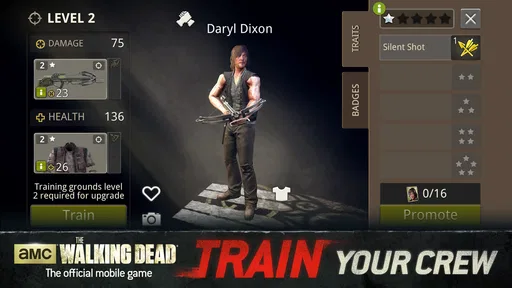
The Walking Dead: No Man’s Land is a turn-based tactical role-playing game based on AMC’s The Walking Dead universe. You build a survivor team, explore dangerous locations, fight walkers and hostile humans, collect resources, and improve your base. The game includes story missions, character progression, equipment upgrades, and several competitive or cooperative activities that add variety beyond the main campaign.
Can I play The Walking Dead: No Man’s Land offline?
The game generally requires an internet connection for most of its features. Online access is needed to synchronize progress, participate in events, access guild activities, receive updates, and use certain game modes. Although some portions may appear playable temporarily without a stable connection, you should not treat it as a fully offline game. A reliable Wi-Fi or mobile data connection is recommended.
Is The Walking Dead: No Man’s Land free to download and play?
The Walking Dead: No Man’s Land is free to download, but it uses optional in-app purchases. You can progress without spending money by completing missions, managing supplies carefully, and improving your survivors over time. However, purchases can provide resources, equipment, or progression advantages more quickly. Players should also expect energy systems, limited resources, and occasional offers that may encourage additional spending.
What kind of gameplay and strategy does the game offer?
Combat is turn-based, so every movement and attack matters. Survivors have different classes, abilities, strengths, and weaknesses, while walkers and human enemies require different approaches. You must consider positioning, noise, action points, cover, weapon range, and the timing of special skills. Team composition is especially important, because rushing forward or using the wrong character can quickly lead to defeat.
Does The Walking Dead: No Man’s Land include multiplayer or guild features?
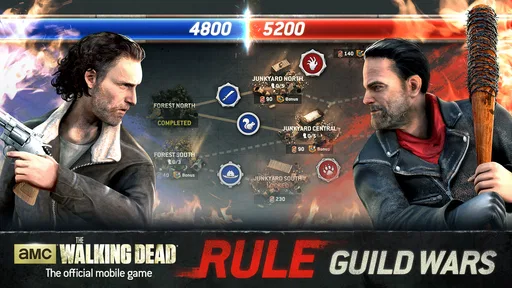
Yes. The game includes guild-based features that let players join groups, cooperate with other survivors, and take part in shared objectives or events. These activities can provide additional rewards and make progression feel more social. Some competitive modes also allow you to compare performance with other players. Joining an active guild is worthwhile, although participation may require regular play and an internet connection.
Play our best games!


